The most successful rental villas aren't necessarily the largest or the most lavishly appointed. The ones guests return to year after year are designed with the realities of vacation rentals in mind: how guests will actually use the property, and the amenities and conveniences groups expect.
As property managers, we've worked with owners designing and building homes for the rental market for the past 13 years. As villa rental agents, we've also welcomed thousands of guests into some of Providenciales's best-loved homes. That's given us a clear view of what today's guests want, and how those expectations should shape the design process.
Design for the whole group
Demand for large villas (8+ bedrooms) is rising, as groups of friends and multi-generational families vacation together. But the number of bedrooms is only one part of the story. We’ve seen seven bedroom villas where the dining table only sat eight. Had this not been caught at the design stage, the reality would have meant awkward extensions being added, or meals spread across two separate spaces.
If a house sleeps 14, the dining space and living area should comfortably hold 14 too – and since the weather can turn, there should be room for everyone to eat and sit indoors, not just out on the terrace. The same thinking should extend throughout the house. It should feel comfortable at full occupancy, not crowded.
A Tale of Two Seas
One of the starkest differences between these two destinations – and one you won't find mentioned in the average travel brochure – is the sea.
The Dominican Republic's main tourist resorts are situated along its north and east coasts, exposed to the Atlantic winds and ocean swells. This creates excellent conditions for surfing, kitesurfing and windsurfing, but the sea is inevitably darker, rougher and less accessible to swimmers and snorkellers.
Turks and Caicos is quite different. Mile upon mile of pristine white sand fringes water that glows impossible shades of turquoise. Wide, shallow bays protected by an offshore barrier reef create consistently calm conditions that invite one to spend hours kayaking, paddleboarding or drifting over coral gardens.
The Activities: Land vs. Water
When it comes to activities, the DR offers immense variety. While the lush jungle interior is brimming with adventure activities such as hiking, white-water rafting, ziplining and canyoning, larger resorts have plenty of sports facilities – golf, tennis, horseback riding and archery, for instance – as well as entertainment in the form of salsa dancing and themed shows.
The Turks and Caicos has fewer land-based options, but it capitalises on its greatest assets: the warm, blue seas. With rich marine life and a dramatic underwater drop-off offshore, it has long been famed as a scuba diving destination, but closer to shore the calm waters and steady breezes are ideal for almost every water sport you could imagine: wakeboarding, e-foiling, kitesurfing, waterskiing, subwinging and skimboarding are just a few you can try. And despite the world-class conditions, the bays remain delightfully uncrowded.
The Cuisine: Local Flavours vs. Global Craft
The Dominican Republic has a clear advantage when it comes to fresh produce. Vegetables, herbs, spices and tropical fruits grow in abundance. Sampling the local cuisine is certainly a highlight, though finding authentic Dominican dishes may require venturing out of the resort to small, family run eateries. Within hotels, cuisine tends to cater to an international clientele, with menus that favour the familiar over the adventurous.
While the TCI offers little in the way of home-grown produce – most ingredients are imported – when in season the local lobster, conch and grouper is not to be missed. But perhaps the more significant difference is the culinary talent TCI attracts. With a reputation as a foodie destination, the islands are home to numerous accomplished chefs who blend flavours and techniques from around the world with flair.

Give people choices
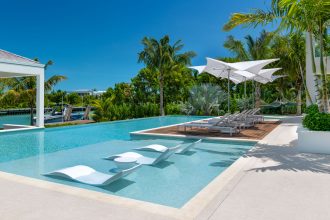
At the same time, groups don’t necessarily want to spend every waking minute together. They want the option to break away too: a few sun loungers by the pool, a shaded seating area, a hammock strung between trees, a smaller deck overlooking the beach. A house with a variety of these spaces gives everyone room to spend the afternoon differently – reading, swimming, napping, or chatting – and to come back together when they choose.

Design for staff as well as guests
Open-plan kitchens work beautifully for everyday living, but in a staffed rental they can put chefs and butlers in the middle of the guests' social space – and not every guest wants service to be visible.
A separate chef's kitchen is one of the smartest features a villa can include, giving staff their own space to prepare food and drinks. A couple of our villas have a one-way window from the chef's kitchen into the living area, so butlers can see when drinks need refilling without intruding on guests' privacy.
Where chefs will be catering for 15+ guests, the kitchen needs to work at that scale too: multiple ovens, stovetops and refrigerators, plus all the small appliances like espresso machines, air fryers and sous-vide machines.
Make outdoor spaces work day and night
Outdoor living is central to the Caribbean villa experience, but guests don't want to sit in the blazing sun all day, especially at mealtimes. Generous covered terraces for both dining and lounging are essential, with retractable awnings or umbrellas for flexible, additional shade.
Exterior spaces can be at their best after dark, but only with the right lighting. That doesn’t mean bathing the whole area in the same light but instead using layered lighting to create softer and brighter pools of light. Pathways should be lit for safety and dining areas should be bright enough to see the table, while around fire pits and other stargazing spots, lighting should be subtle enough not to wash out the night sky.

Make every bedroom count
Owners often dedicate far more space to their own suite than the rest of the bedrooms. This is understandably for a private home, but doesn’t always work for rentals. If a group of friends rents a seven-bedroom villa and splits the cost equally, who gets the much larger primary suite?
Every bedroom doesn't need to be identical, but narrowing the gap makes a property more appealing to renters. Secondary suites should still have generous bathrooms with double vanities, ample closet space and quality furnishings, rather than feeling like an afterthought.
Flexibility matters too. Twin beds that convert properly into a king let the same room work for friends on one booking and a couple on the next, widening the range of groups a villa can accommodate.
Keep an eye on what guests want
Guest expectations change, sometimes quickly. Home offices were in high demand during the pandemic and are now rarely requested, while dedicated fitness facilities have become a deciding factor for some guests. A villa without a gym can rule it out entirely. Pickleball courts are also exceptionally popular, particularly with multigenerational groups, and can often be combined with an existing tennis or basketball court.
For owners designing a rental investment, keeping an eye on these shifts matters as much as getting the fundamentals right: what is competitive today may not be in five years.
If you're planning to build or renovate a rental villa in Turks and Caicos, our team can support you throughout the design and construction process. Find out more here.